Hello, I’m Tom Riley, and welcome back to The Fast Charge, a British EV newsletter.
Top story in today’s email… It’s confirmed, eVED is coming to EV drivers in April 2028. I take a look at the consultation outcome and areas where questions remain.
Elsewhere… Nissan’s are popular, petrol is being discounted, and could the EU be about to cut VAT on EVs (and will the UK follow)?
As always, if you have any comments or feedback, please reply to this email or message me on LinkedIn.
Pay-per-mile and the holes that remain
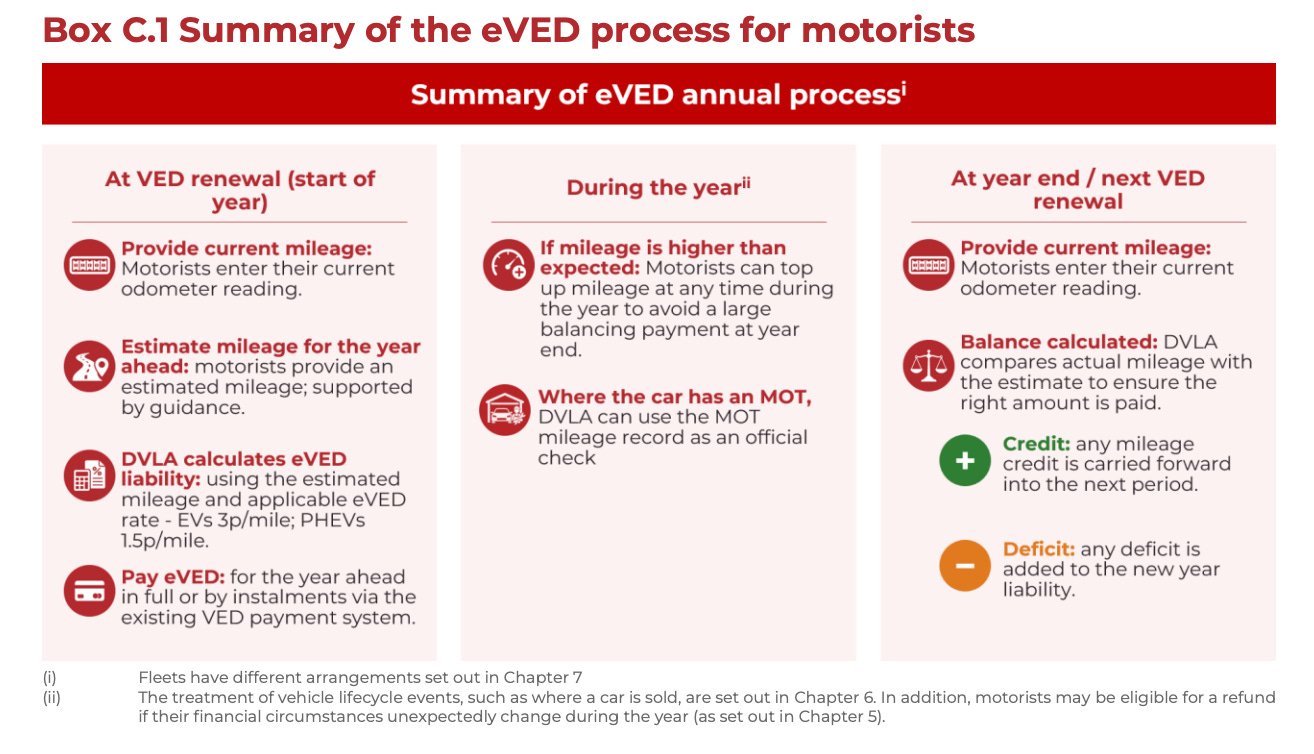
Summary: During last year’s Budget, the Chancellor announced that she would introduce a new vehicle excise duty scheme for owners of EVs and PHEVs. In short, the Treasury’s proposals were based on a mileage tax, with EV owners being charged 3p per mile, and PHEV owners being charged 1.5p. For a typical EV owner doing 7,000 miles a year (which is what the average UK driver does), it’ll cost £210.
In the months since November… The UK Government, spearheaded by HM Treasury alongside the Department for Transport, has been consulting on its proposals for how the scheme should be run. In total, more than 5,000 people responded to the Treasury about its plans and, on Monday, the outcome was published.
It’s not clear what the sentiment of all the responses was… Though one would imagine it was fairly negative. The eVED introduction has faced criticism from all corners for its poor timing. Toby Poston, BVRLA chief executive, has labelled it the “wrong tax at the wrong time.” Ben Nelmes, CEO of New AutoMotive, has called the scheme “absurd”, Tanya Sinclair from EVUK has suggested the policy is sending mixed messages to consumers, and Vicky Edmonds of EVA England said it was “disappointing for drivers”.
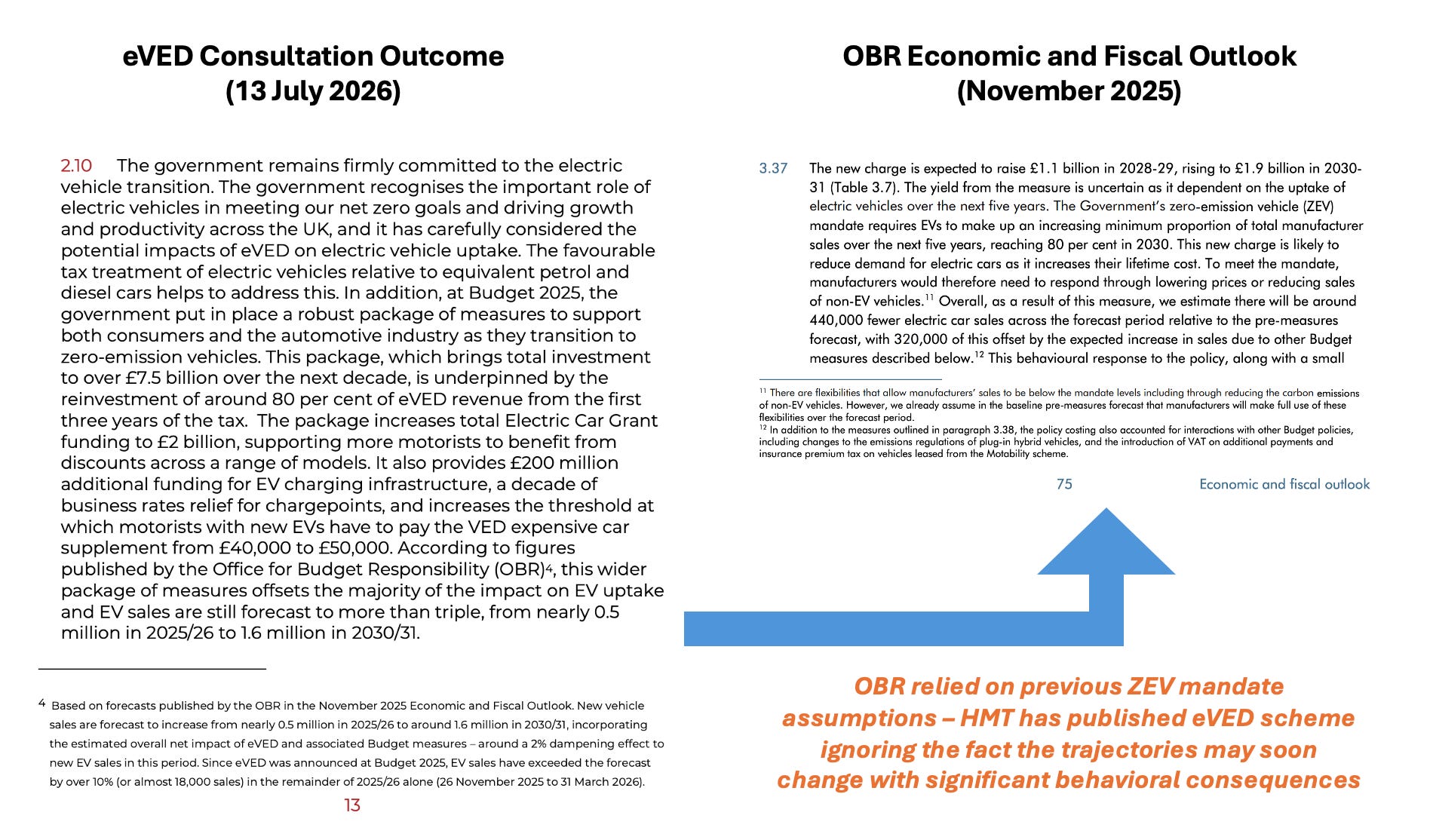
Obviously… I don’t believe anyone thinks EVs should get a free pass forever. But the timing is not great. HMT has confirmed April 2028 as the date eVED will come into force, which is well ahead of the current 2030 ban on internal combustion vehicles. As a reminder, even the OBR argued after the last Budget that the proposed scheme would reduce sales by 440,000. The OBR later clarified that this should be offset by 320,000 due to other incentives available for EV sales.
However… Unlike today, back in November, there was no debate about changing the ZEV mandate, which is a significant sales lever on carmakers. Should Andy Burnham, when he becomes Prime Minister in a week, stick with Starmer’s decision to lower the trajectories, surely this figure will sink?
Furthermore… On page 13 of the government’s eVED response, there is a footnote that refers to the OBR’s Economic and Fiscal Outlook from the last Budget about expected EV sales to 2030. Clearly, then, it looks like HMT has gone ahead publishing this eVED scheme based entirely on how the rules are set today, rather than waiting to see how the ZEV mandate plays out. That feels like bad economics. It’s like raising income tax on someone just moments before you tell them they have a terminal disease. Totally illogical… unless you need to guarantee the income.