

Hello, I’m Tom Riley, and welcome back to The Fast Charge, a British EV newsletter.
Main item today... Will tomorrow’s elections mark the start of a slippery slope towards greater disparity in charge point coverage across the UK? I review what happened when Reform took over numerous councils last year, including three recommendations based on conversations with EV council officers.
Elsewhere... 2 million EVs have been registered in the UK, new authority partnerships, and what’s happened to Warwick’s chargers?
As always, if you have any comments or feedback, please reply to this email or message me on LinkedIn.
Will the local election results impact the UK’s transition to EVs?
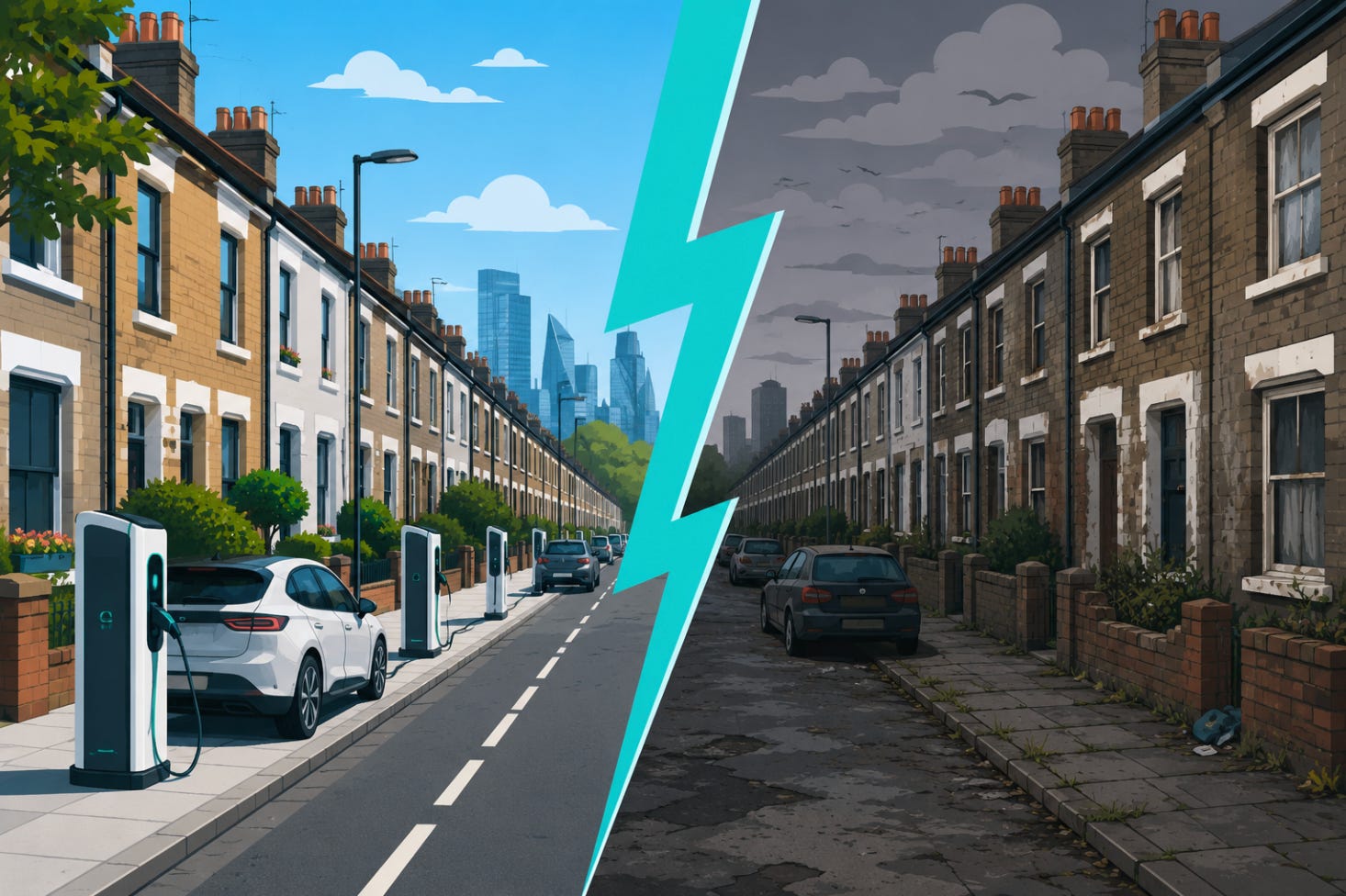
This week, elections will be held across the UK. Not only are 5,000 seats across 136 local authorities being contested, but there are also elections in Scotland and Wales. For Westminster, the results of these elections will be seen as a temperature test of government policy, and many will draw conclusions about the potential results of the next General Election, due to be held in 2029.
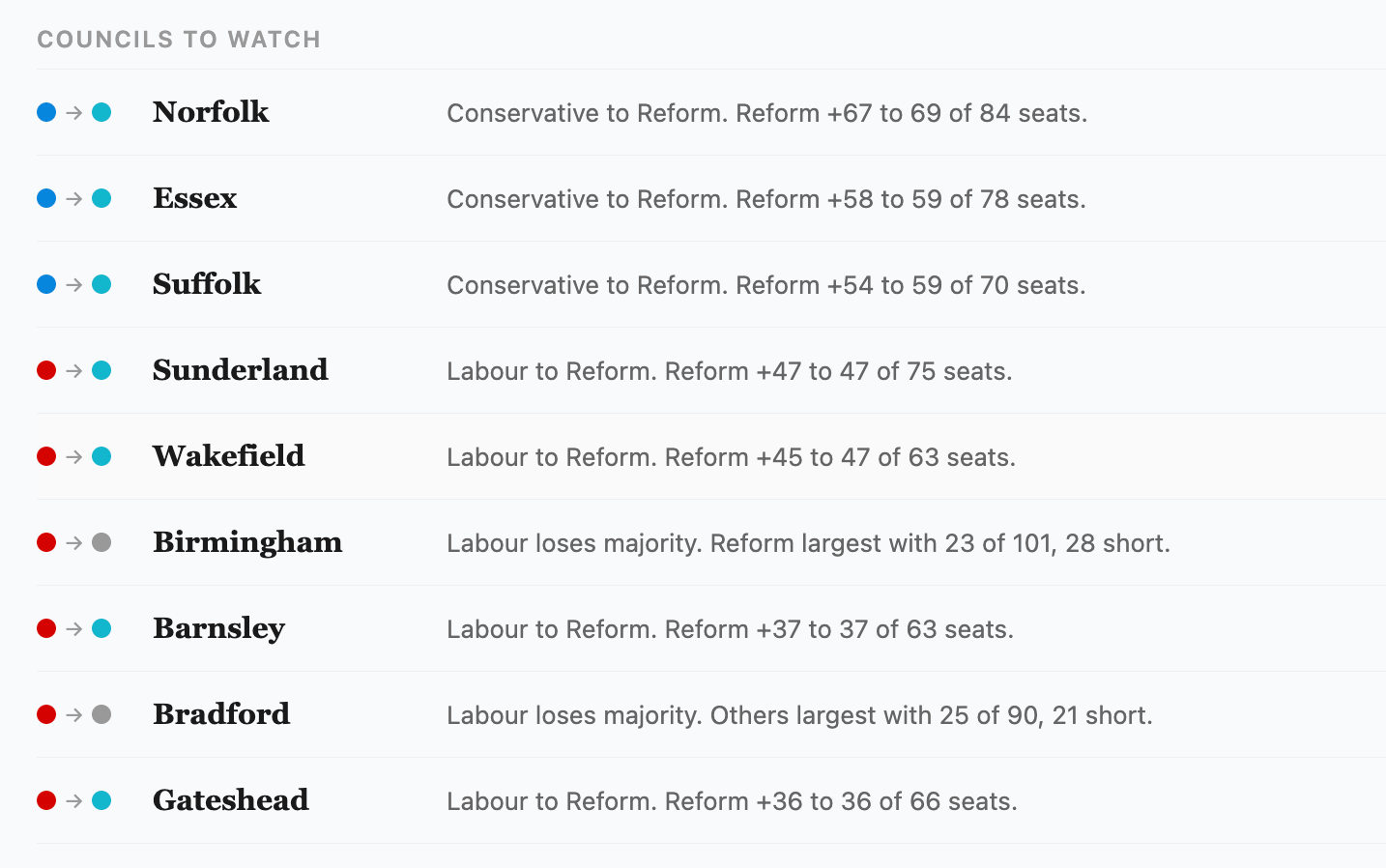
Overall... It’s expected that Labour and the Conservatives will bleed councillors heavily to Reform and the Greens, with the Lib Dems also making small gains. The latest prediction, according to PollCheck, suggests 59 councils could change hands, including Norfolk, Essex, and Sunderland. The big overall winner is expected to be Reform, which could gain some 1,400 councillors. Labour could lose more than 1,000 councillors, especially in London, which has always been a stronghold for it.
But the BBC can tell you all that... Today, I wanted to provide a view on how these results could impact the EV transition. And to share what we can learn from councils that have already had to go through this last year.
In the present day...
Given the sheer thousands of candidates standing for parties in these elections, I hope you forgive me if I’ve not been able to stalk each one for their policy views on EVs. Instead, what I have done is decided to focus on the potential fallout from a Reform surge, given it’s the party most likely to disrupt EV policies – either by taking control of councils, or by influencing the direction of other parties.
But before I do, I want to briefly pull out the Green Party. Led by Zack Polanski, the party has really gained popularity this year, especially in London, where it could take control of several authorities, including Hackney and Lewisham. It may well become the second biggest party in London, Birmingham, and Manchester. Given how important clean air is in cities, and the higher-than-average percentage of homes without driveways, this is clearly significant for the EV transition.
And while you may be thinking, ‘Tom, they will help make UK cities a shining beacon of EV brilliance for others to follow’. I wouldn’t bank more than a tenner on it. While the Green Party is clearly in favour of EVs, even previously saying it would bring the ZEV mandate forward to 2027, the party is ultimately not a natural supporter of cars. The Greens would likely remain committed to EV charging, as it’ll tick lots of their social accessibility boxes, but I suspect they will be prioritising public transport, emission zones, and active travel where they can.
Now, onto the party you may be worried about: Reform UK. Led by Nigel Farage, the party has consistently polled higher than the main parties, with a large amount of their success put down to their tough stances on immigration and taxpayer waste.
If there is one policy that Reform has been consistently clear on, it’s their belief in net zero being “stupid”. Even though many of its members own and love their EVs, including Richard Tice, Reform’s Deputy Leader, their concern is that the switch should not be pushed onto hard-working British people, especially if it’s going to cost them more and be impractical. This position all sits neatly into the right-wing view that net zero is only about pleasing a few confused matcha-drinking tree huggers.
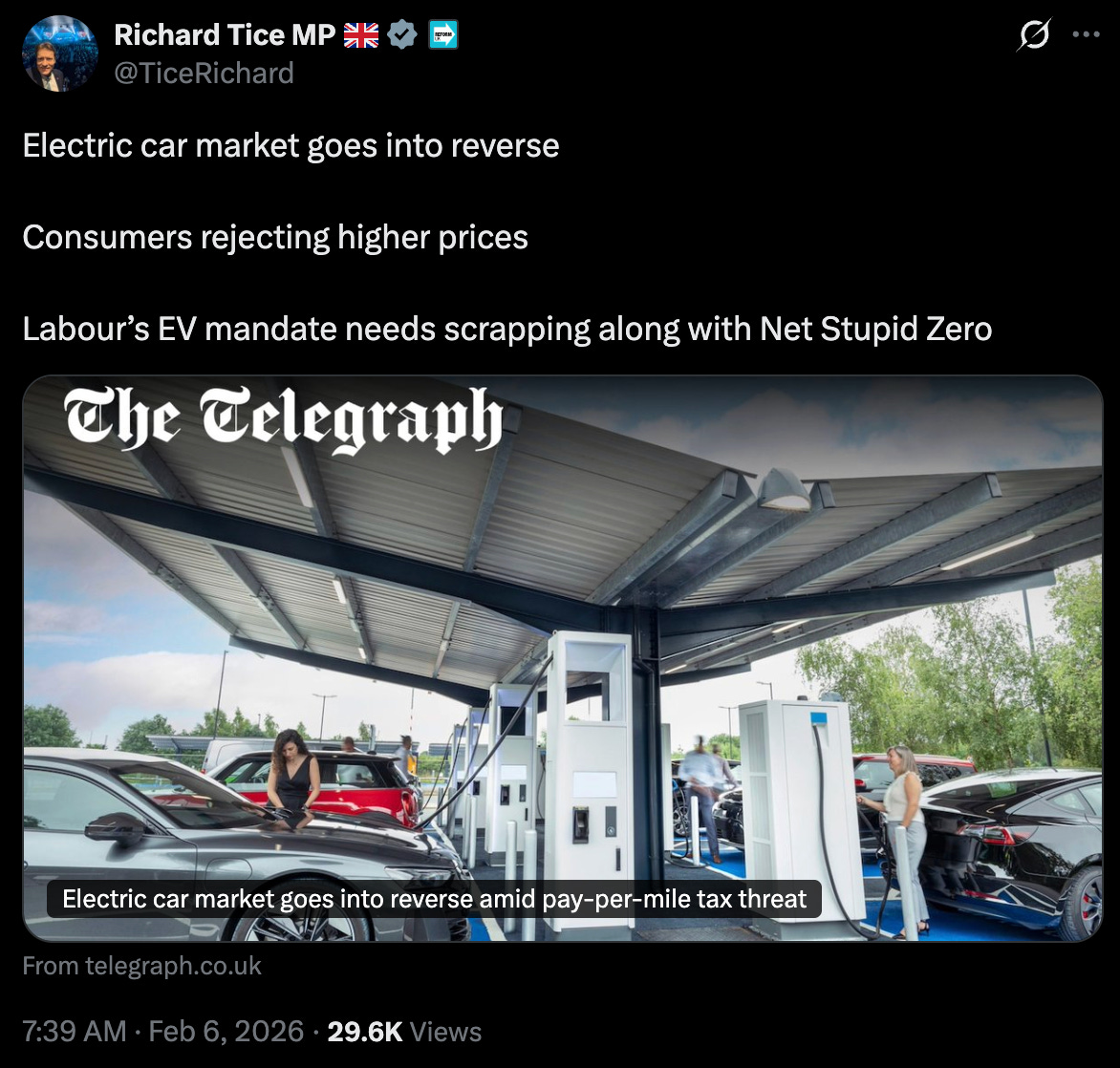
However, despite their public pledges to scrap the ZEV mandate, there are reasons to be hopeful that, locally at least, it may not be disastrous.
What we can learn from last year...
During the local elections in 2025, Reform took control of 10 local authorities, including six county councils: Derbyshire, Lancashire, Lincolnshire, Nottinghamshire, Kent, and Staffordshire. Having analysed what those councils did after Reform took power in 2025, my conclusion is that Reform’s electoral bark is not the same as its administrative bite.
Across all six county councils, I found that EV plans have progressed. For example, in Derbyshire and Nottinghamshire – both part of the East Midlands – they’ve accepted money to deploy pavement EV charging, and have also been moving forward with their Local EV Infrastructure projects. The same can be said for Lancashire, which has plans for 6,665 charge points by 2030, and in Lincolnshire, where the authority has been engaged in pilots with Weena.
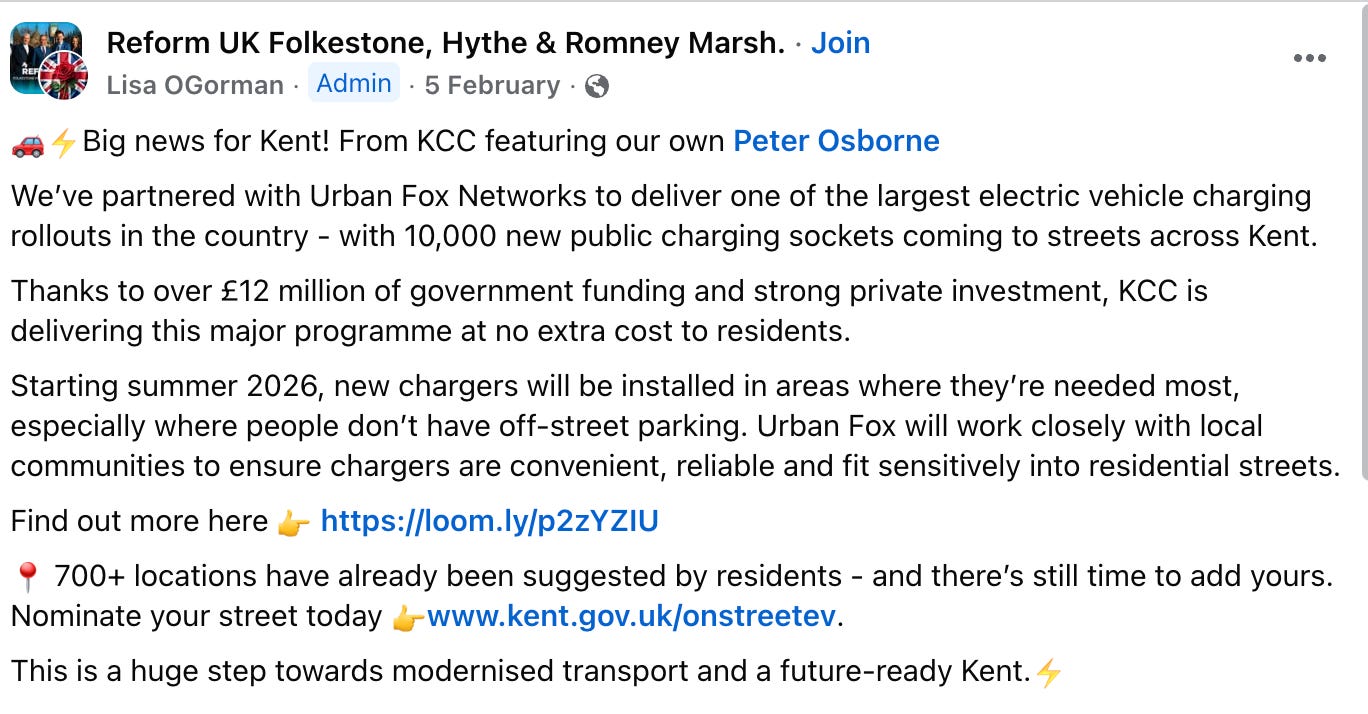
Further south, Kent County Council can’t get enough of electrification. The area recently partnered with Urban Fox to install 10,000 chargers – an enormous amount. This was celebrated in a local Reform Facebook group.
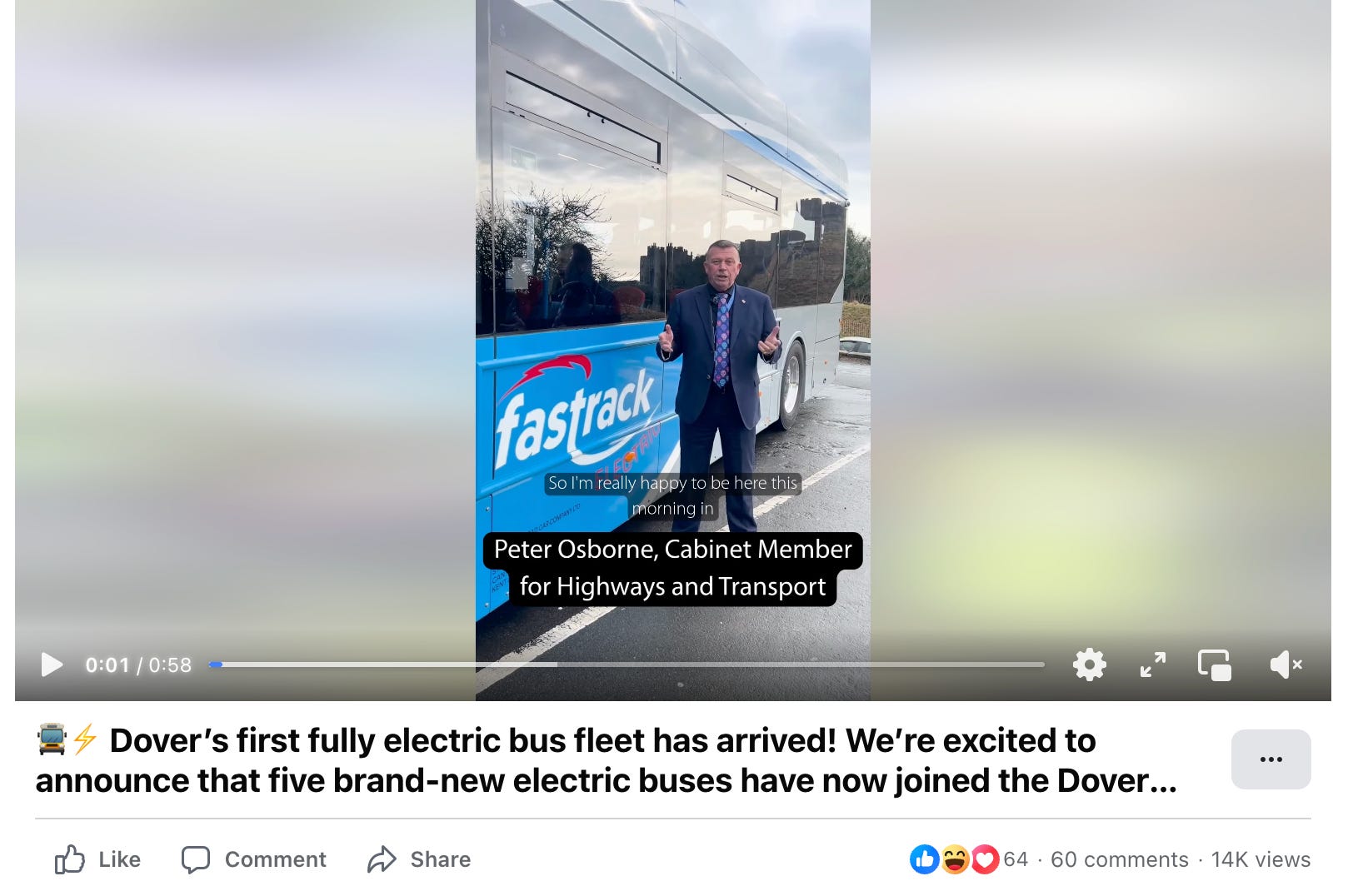
And it’s not just chargers. Peter Osborne, the Reform councillor who looks after highways at Kent County Council, has also been filmed unveiling all-electric buses in Dover.
But it has not been entirely smooth. At Staffordshire County Council, the pace slowed up a lot…
