

Hello, I’m Tom Riley, and welcome to this bumper edition of The Fast Charge, a British EV newsletter.
Top stories in today’s free email…
Firstly… After going unused for three years, I can reveal that the UK’s first electric fire engine has now responded to more than 700 incidents. This is a ‘blazing success’ for the electrification of emergency service vehicles.
Secondly… Shell launches a new battery fluid to flatten EV charging curves and allow batteries to fill up faster.
Elsewhere… SMMT’s latest call for a ZEV mandate review (and my idea to meet them in the middle), Polestar is blocked from US sales, and lots of fresh consultations.
As always, if you have any comments or feedback, please reply to this email or message me on LinkedIn.
Exclusive: UK’s first electric fire engine attends more than 700 incidents 🚒
Would there be anything more terrifying than being in a house fire? The thought that you might burn alive or suffocate, glued into your clothes, holding onto a loved one or, even worse, being alone as all your worldly possessions turn to ash. I get the heebie-jeebies just thinking about it. But, for a woman living in Fulham earlier this year, these thoughts must have felt very real.
The house where she lived was on Greyhound Road, a popular place for young professionals and families. It was made up of multiple flats, including one in a basement. And on a Wednesday evening in January at around 5.30pm, due to a fault on a consumer unit, the house set alight.
While four people, including a baby, were able to escape the house before emergency services arrived, she remained inside, trapped.
After firefighters reached the scene, fitted with breathing apparatus, they entered the blaze and were able to rescue her on a staircase. At the scene, she was treated by London Ambulance Service crews for smoke inhalation.
Overall, the fire was attended by six fire engines and more than 40 firefighters. Thankfully, just over an hour after the first 999 call was made, the blaze was under control.
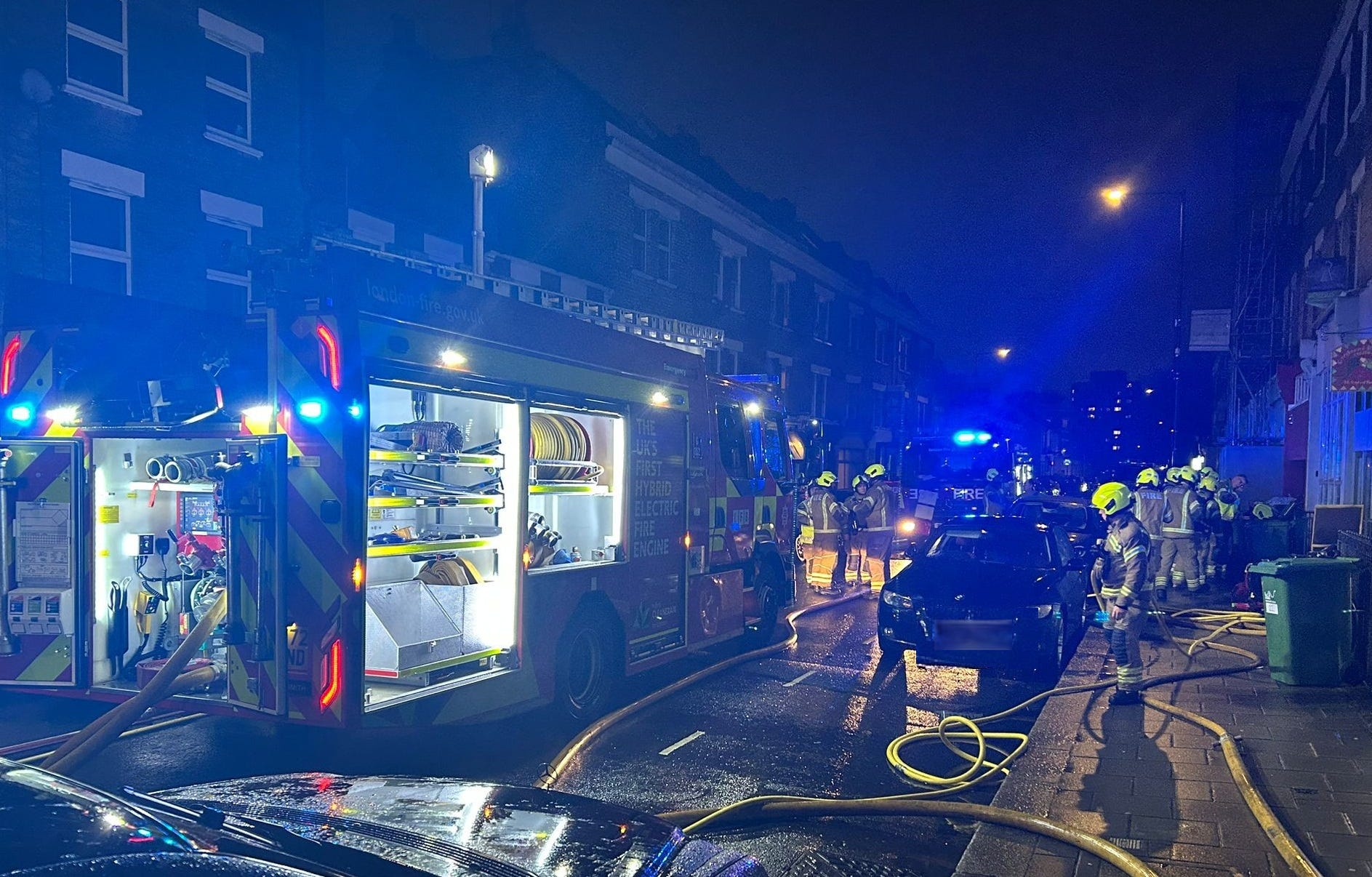
*Exclusive*… The Fast Charge Newsletter can reveal that the above incident is just one of more than 700 incidents that Britain’s first electric fire engine, known as the ZEPA1, has attended since October 2025.
To save you the maths… that means the EV fire truck, part of the London Fire Brigade’s fleet, has been called out to tackle emergencies more than twice a day since being put into active service. This is an incredible feat for a fire engine that had previously been sitting, as I reported in early 2025, unused for three years while being tested.
As background… ZEPA stands for Zero Emission Capable Pumping Appliance. Like any other fire engine, it comes with a 1,750 litre water capacity and can also carry 100 litres of foam.


The truck is based in Hammersmith… The station is fitted with a dedicated 150kW EV charger to recharge the huge 280kWh battery. The emergency vehicle is fitted with both a DC and an AC port for charging. While it has a 200 mile range, if you’re being really technical, it is most accurate to say this truck is a plug-in hybrid, as it does have an engine as a backup. Although having recently witnessed the ZEPA1 in Chiswick returning from an incident, I can personally report that it was silent.
Commenting on the engine’s success… London’s Deputy Mayor for the Fire Service, Jules Pipe CBE, said:
“London Fire Brigade is taking bold action to reduce carbon emissions, introducing the UK’s first electric-hybrid fire engine and creating a more sustainable future, all whilst keeping Londoners safe around the clock.
“The climate emergency is putting extra pressure on our fire service so it’s imperative we do what we can to reduce emissions. This next-generation fire engine proves we can combine cutting-edge performance with lower emissions, building a cleaner, greener, and safer London for everyone.”
To mark its first year in service… I understand that the London Fire Brigade is planning a public update in September. By that point, one imagines it will have easily completed well over a thousand jobs.
🔥 I am marking the success of the fire engine with a ‘fire’ sale. For £8 a month - aka, a pint in 2026 Britain - you can support my writing. And maybe you can even expense it!
Shell flattens charging curves with new solution 🚗
Context: One of the biggest challenges of EVs is that, when most people plug in their cars at an ultra-rapid charger, though it may say on the outside ‘175kW’, the reality is that it’s a bit of a white lie. This is because, even if you own an EV that is capable of accepting a charge at that speed, the reality is that it may only be for about a minute.
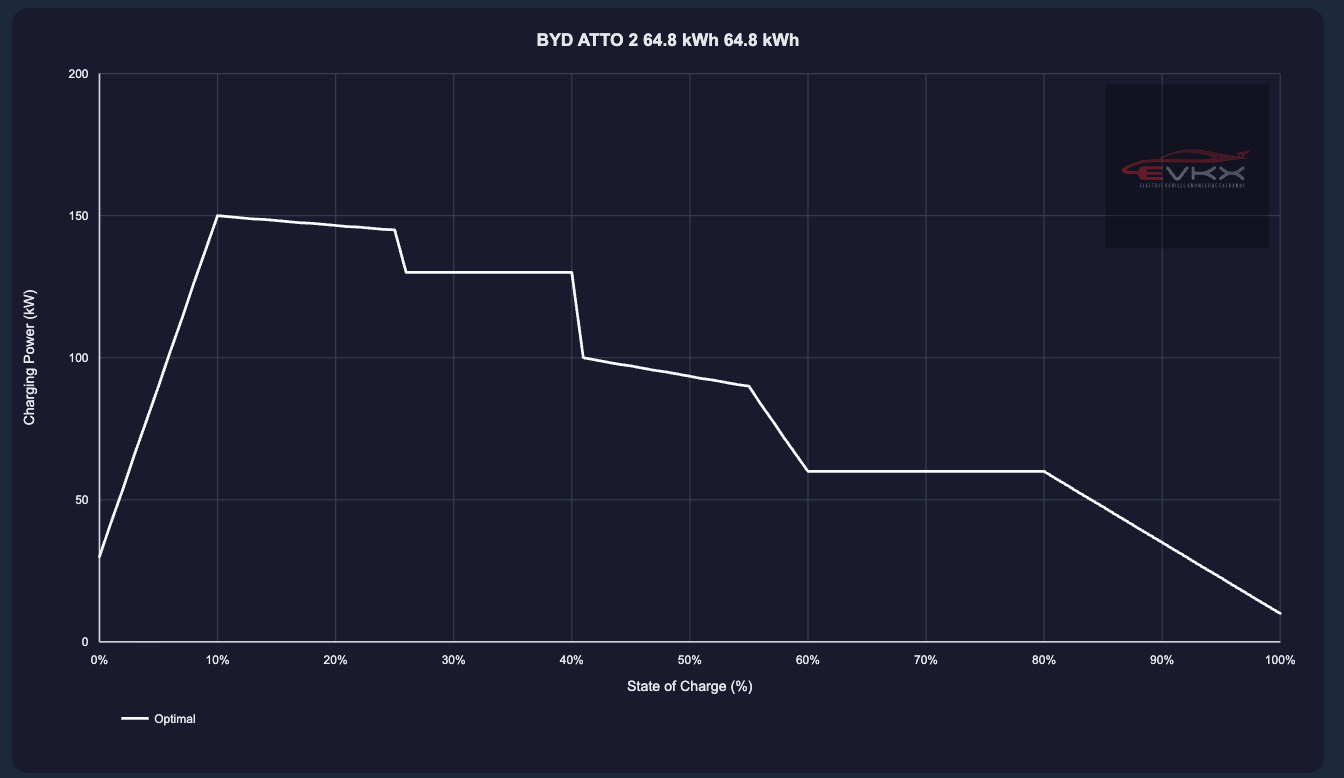
Let’s take the popular BYD Atto 2 as an example. It has a battery size of 64kWh, and it can accept a max charge of 155kW. So, if you turned up at a charger with 175kW of power, you might easily assume that, once you plug in, you’ll benefit from that max power all the time. But you won’t. As the chart below shows, you’d only ever get near that level for mere moments. After that, the power accepted by the car’s battery slowly decreases. Every EV’s curve is different, but they exist to manage the heat and protect the battery cells.
However… Shell’s R&D team has come up with a solution that could allow EVs to charge at higher speeds, for longer.
Launching officially last week… Shell’s solution is, well, exactly that. Unlike traditional cooling systems that use an anti-freeze liquid, Shell has created a new fluid that allows for far better cooling of a battery and other EV components.
To prove the point… Shell has developed a concept car which can be charged consistently at 175kW from 10% to 80% without the speed slowing. The car Shell designed has a smaller battery than most typical EVs – the battery is only 32kWh. But it can be charged in under 10 minutes because of the better thermal management.
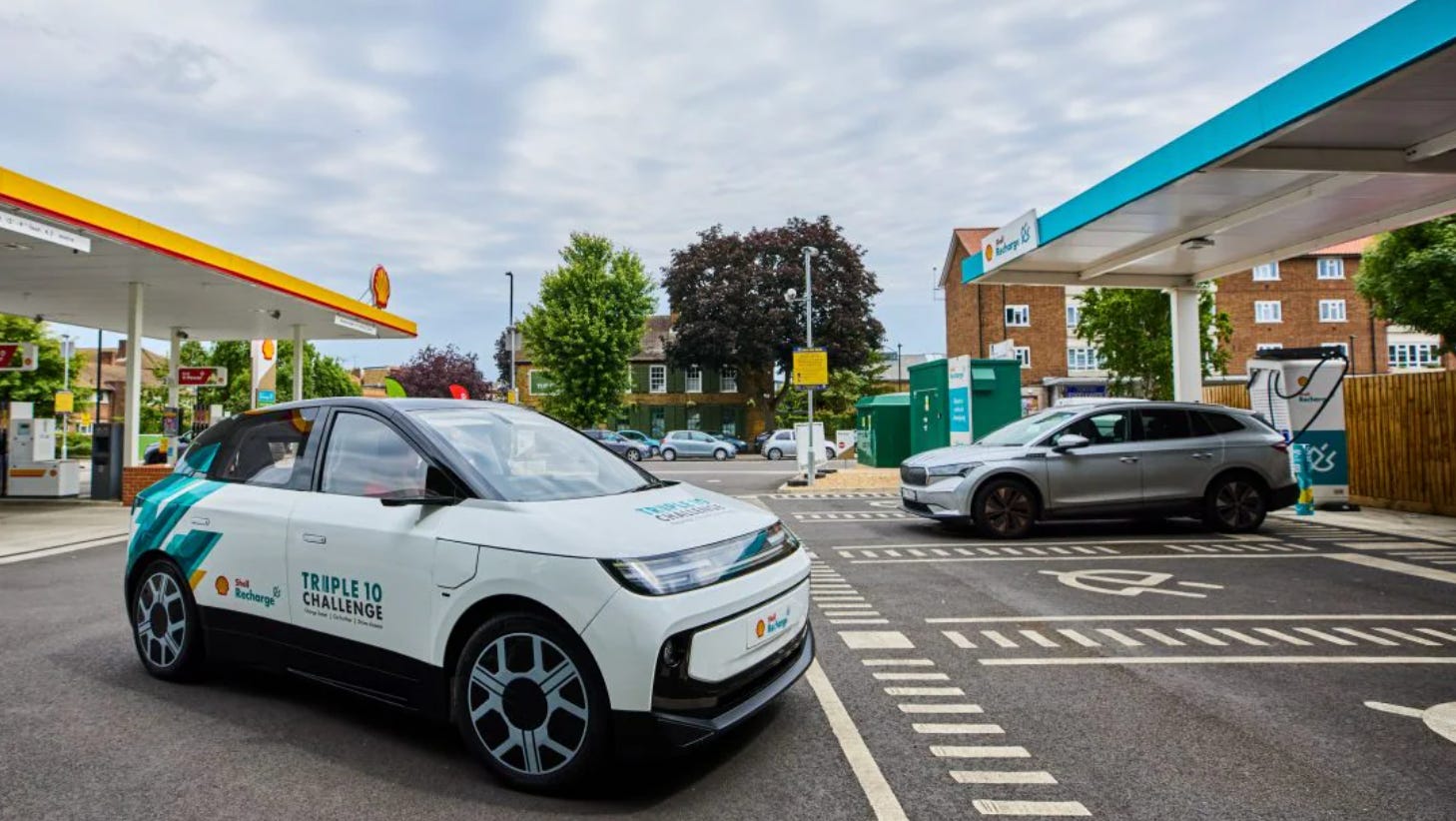
This comes after BYD recently launched its 1,500kW flash chargers in the UK. While a hugely significant media moment, Shell believes its technology could be a lot more practical, given that there are few EVs on the road that can accept speeds above 300kW. Likewise, given grid capacity, most currently available ultra-rapid chargers in the UK sit around the 150kW to 300kW mark.
Shell’s development has come about from its ‘Triple 10’ challenge. The outcome of which could hopefully open up a new frontier for developing small urban EVs that have better ranges, are less hassle to recharge, and come with less carbon emission baggage. It will hopefully end up meaning fewer drivers will default to a large SUV just to guarantee a higher range and better charging speed.
Obviously… Launching a concept car is quite easy. How will an oil company get this into car factories? Well, to answer that one, I asked Shell’s Selda Gunsel, who is the group’s Chief Technology Officer. “Our purpose was really to demonstrate what is possible. And this really helps us in our conversations with OEMs.” She explained that Shell already had relationships “with most of them,” but did acknowledge “as a technologist, it takes a long time for a new technology to go from the lab or demo phase to actual commercialisation.”
During our conversation… I did get a strong sense of confidence that the tech would work its way through to carmakers in the UK and abroad. At several points, Selda mentioned Shell’s work with BYD. Furthermore, when I asked why they launched in the UK and not anywhere else, Selda praised “the research and development that goes into the automotive industry and motor sports. I mean, the UK has an incredible heritage here, with the universities, with the different partners.” Well, let’s hope it comes to fruition!
Find out more about Shell’s Triple 10 Challenge and the concept car here.
Latest EV news…
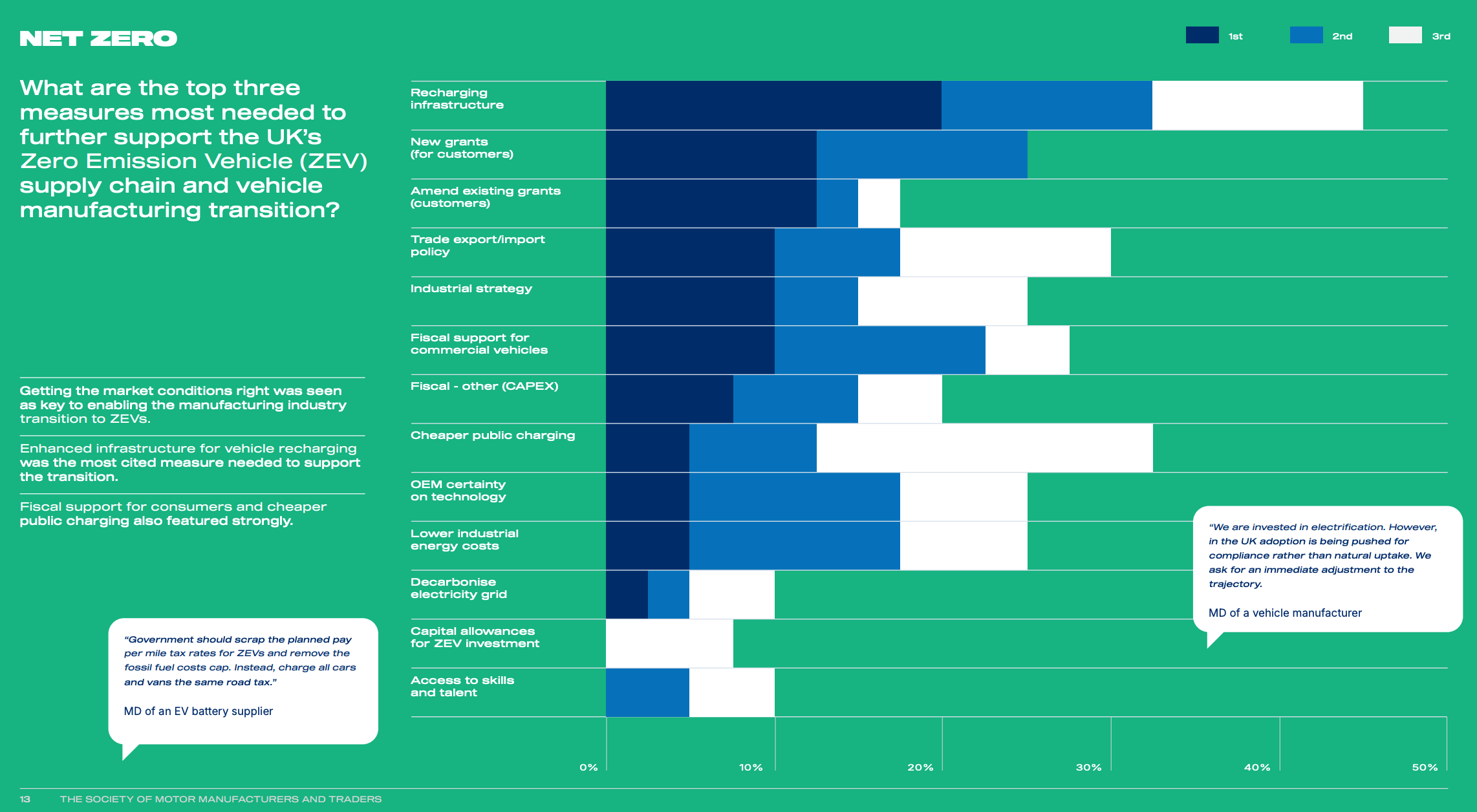
📈 Yesterday, the Society of Motor Manufacturers and Traders repeated their call for a ZEV mandate review. Their latest push came alongside a new survey of members, which found 73.8% think the UK is significantly behind the trajectory to 2030. In SMMT’s poll, manufacturers made up less than a third of those surveyed (31.3%). Most respondents were in retail (37.5%). What was most intriguing in the poll was what measures SMMT’s members believed would solve their concerns… The top three were ‘Recharging Infrastructure’, ‘New grants for customers’, and ‘Amendments to existing grants’… I’m by no means an economist, but how does a mandate change address these three? Find the survey here, and their latest report here.
Riley’s mandate solution… Over recent weeks, I have been talking to a lot of you about the trajectories. And one idea I have been throwing out to people is that, perhaps if the ZEV mandate gets reduced, in its place should be a charge point mandate. Yes… that policy idea thought up by manufacturers and, on the face of it, utterly non-sensical. Why then? Well, given the concern by many is that lower trajectories will affect investment across the EV sector, could a charge point mandate act like a government guarantee? In my mind, it would be akin to situations where, historically, government has effectively insured loans and investment by UK businesses. For example, last year when the UK guaranteed £1.5 billion for Jaguar Land Rover. Why can’t something similar be done for EV infrastructure? Ruddy hell, maybe I am an economist.
🍎 Do you remember the Apple Car project? Don’t worry if you don’t; it died a death quite a while ago. But the project's designer is very much alive. And, this week, he launched his own EV called Amble. It’s effectively a golf buggy. It does look very cool, though not sure how practical it will be in the UK, though I understand its target is likely resorts.

😕 VW has revealed plans to cut 100,000 jobs and stop production at some factories. Read more.
⛔️ Polestar has been banned from selling vehicles in the US because it’s a national security risk, due to the software and hardware having links back to China. Polestar is owned by Geely, which also owns Volvo… which is still allowed to sell cars in the US. Read more.
🚙 I hate how people change their names so they are more ‘on brand’. For example, RJ Scaringe, the Founder of Rivian… What’s wrong with just going by Robert? Anyway, a bit of a tangent. But if you want to read an interview in The Guardian with Mr RJ Scaringe about Rivian and his views on car making, you can find it here.
😐 Talking of names, one of Britain’s most famous, Jaguar Land Rover, is apparently going to price its much-delayed all-electric Range Rover above its petrol counterparts. According to Automotive News, JLR believes a six-figure price will prevent it from being drawn into price wars. There’s logic in that somewhere. Read more.
🧐 Ferrari’s marketing boss has quit weeks after the launch of the Luce, the supercar maker’s first-ever EV. That’s certainly not amore. Read more.
🛠️ An analysis of 40,000 repairs by AX, a fleet management firm, has found that the average repair cost for an EV following a non-fault crash is £6,363, which is roughly a fifth more than the typical £5,338 cost to fix an ICE vehicle. Read more.
🏆 The EV charging network Zest has now installed 3,000 chargers in the UK, having only launched four years ago. A rapid achievement! Read more.
👉 Gridserve has opened a new 32 bay hub at Tamworth Services. The hub includes 8 bays designed for e-HGVs, e-buses, and… electric caravans. Read more.
👍 According to analysis by ChargeUK, nine in 10 rapid chargers installed over the past two years are located outside of London – countering the narrative that EV chargers are all solely being put in across the capital. Read more.
⚡️ InstaVolt has acquired 260 rapid chargers from GeniePoint. This will mean InstaVolt has 4,250 chargers across 1,200 locations in the UK. The GeniePoint sites will be upgraded and rebranded over the next 12 months. Read more.
💷 MFG EV Power has reduced its prices from 79p to 59p per kWh until 30 September. See here.
🚓 Cable theft is still rife across the UK. Most recently, four sites in Devon have been hit. Read more.
🏴 The Welsh-based Plug Charging has acquired the business Energy Park, which will mean the company has a stronger presence in North Wales. Read more. Elsewhere in Wales, residents in Powys can respond to the design of the area’s EV strategy here.
🔌 Leeds Skelton Lake services have received 10 additional 400kW Ionity chargers, taking the total up to 16. Woof. Read more. Talking of Yorkshire, all those living in East Riding are encouraged to submit their views to an EV charging consultation.
📮 Last but certainly not least… DfT has launched a consultation on the introduction of a strategic charging infrastructure scheme. A sort of skinny version of the Rapid Charging Fund. You have until 28 July to respond. During that time, I am planning to write about MSAs. So ensure you both get your views into DfT, and perhaps also to me! See here.
Hi Tom, yes I'm being pedantic but just an FYI energy is kWh and power is kW. I look forward to the next newsletter and hopefully seeing a hybrid fire vehicle on the streets of Bristol soon!