

Hello, I’m Tom Riley, and welcome back to The Fast Charge, a British EV newsletter.
Let me begin with an apology. Firstly, this edition is a day late. Secondly, by my own admission, it’s a bit rough and ready.
This week, my partner and I have endured quite a nightmare. It started by getting keys to our new home, only to find it hadn’t been cleaned since its previous owners left. And further not helped by an awful experience with Audi West London – an absolute tower of laziness and engineered incompetence.
Anyway... Back to this week. What I really wanted to mention today is Zapmap, as I believe they could be on the cusp of being recapitalised and set on a path to international growth.
Elsewhere... Some quick EV news, including... the VAT tribunal decision getting everyone excited, new EV registration figures, and the true impact of Reeve’s pay-per-mile tax.
As ever, if you have any comments or feedback, please reply to this email or message me on LinkedIn.
Analysis: Is Zapmap preparing to go global?
Context... Last week, Zapmap, the official provider of EV charging data to the Department for Transport, revealed that it was changing the way it measured charge points. Whereas previously Zapmap (and DfT) counted one device as one charger, under the new changes, Zapmap (and DfT) will now count the number of charge point connections available on each device.
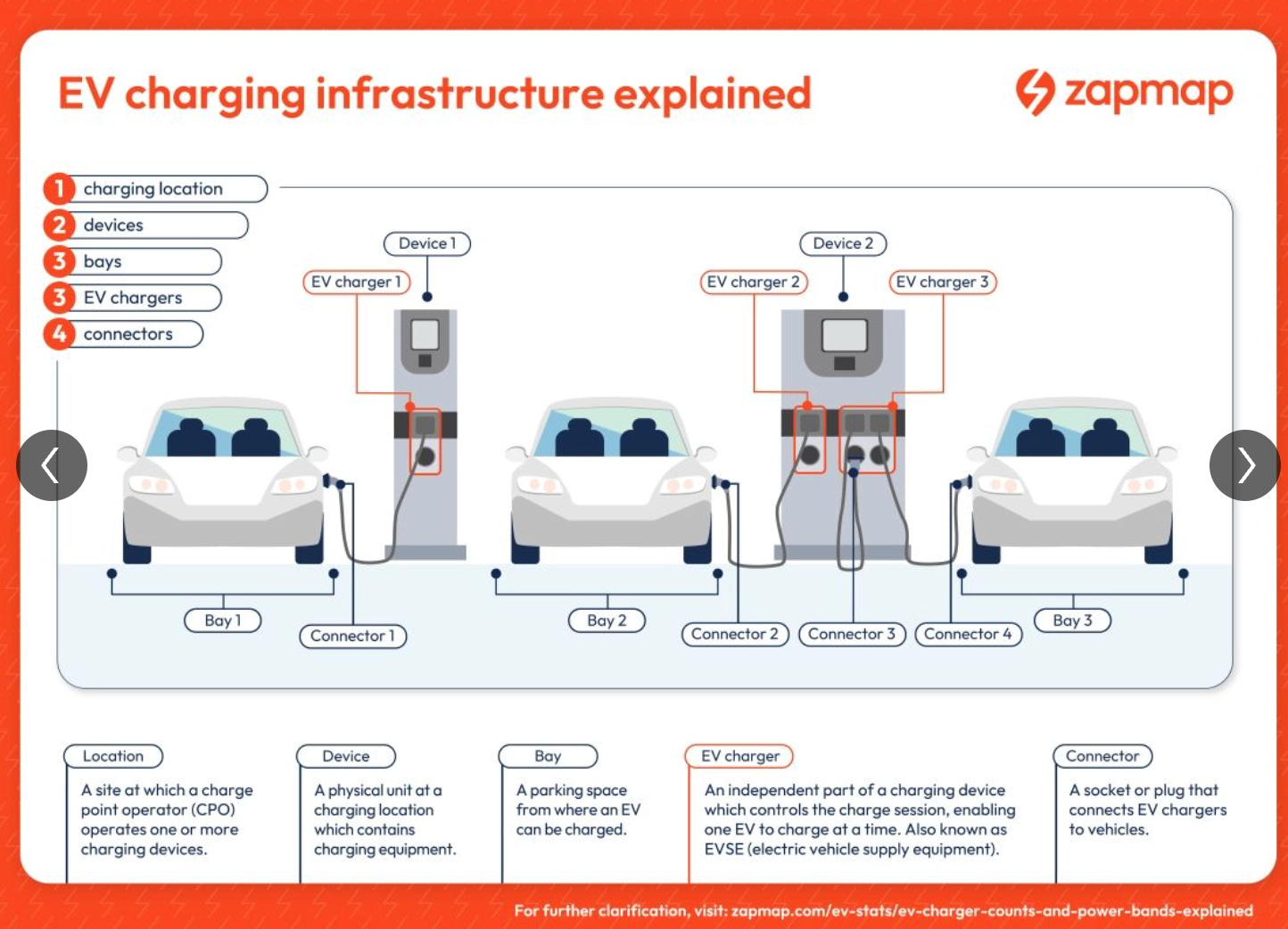
This means... in one fell swoop, the UK has gone from having 88,513 chargers to 116,726. This is because some rapid chargers can often be used by two EVs at once.
Why? Zapmap’s co-founder and COO, Melanie Shufflebotham, explained on LinkedIn that, “the ways to track charging has improved dramatically, especially with the widespread use of OCPI. Moving to EV chargers (EVSE), whilst not perfect, is a better way to track the number of EVs that can be charged simultaneously and also brings the UK in line with international reporting.” See here.
According to Melanie’s post... It was DfT who led in making the change. And who could blame the government for wanting to make the figures look a lot higher at a time when press reports keep suggesting EV demand is cooling.
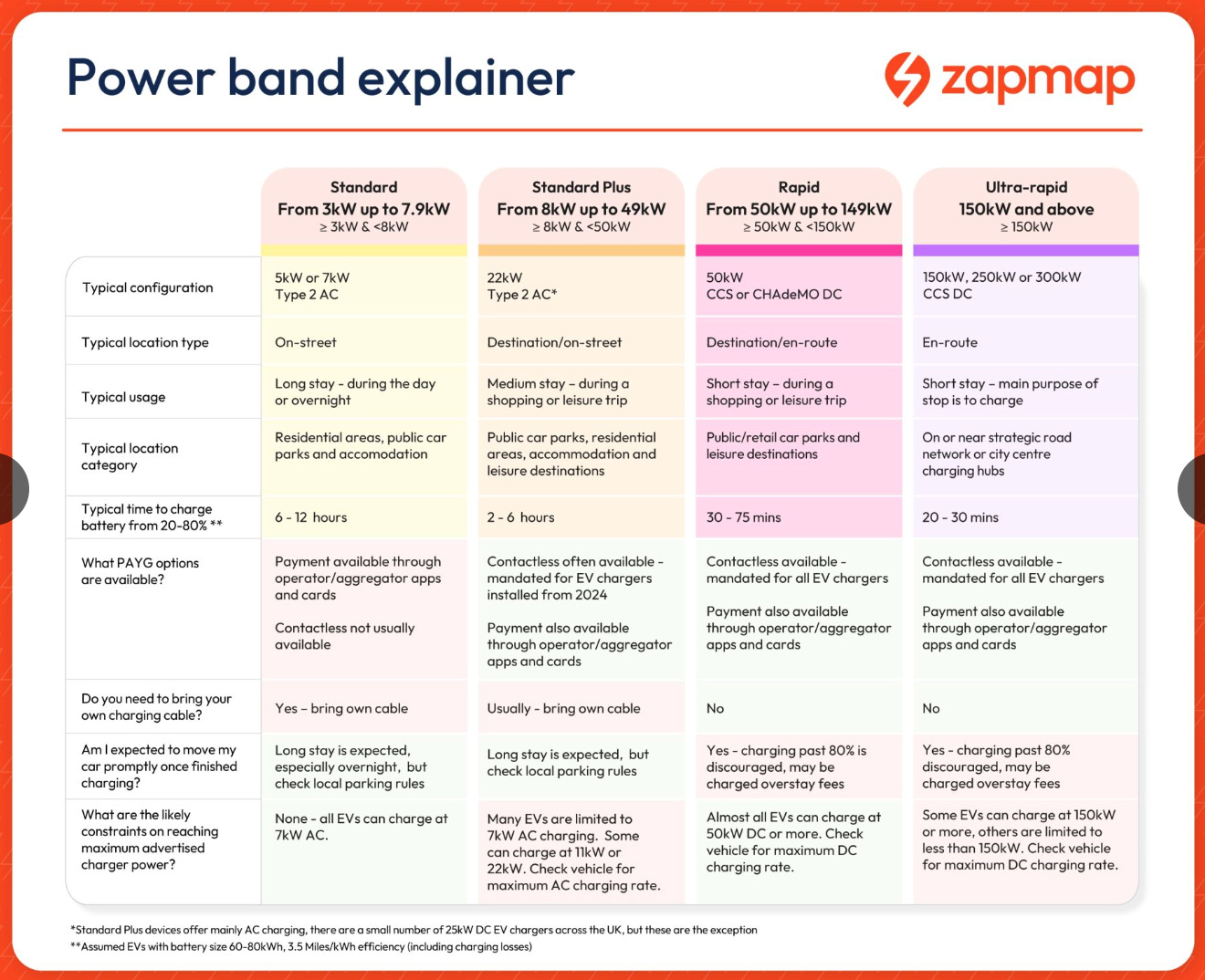
Alongside changing the way they count chargers, Zapmap and DfT will also no longer separate speeds between ‘slow’ and ‘fast’; instead, they’ll become ‘standard’ and ‘standard plus’. Again, if you were the government, why would you want to promote that you have a lot of ‘slow’ infrastructure?
However... the timing of the change raised my eyebrows. That’s because, almost a year ago, close observers may recall a rather rogue press release from Octopus Electroverse – a Zapmap competitor – which boasted that the UK had reached past 100,000 chargers. It led to several questions over what the true number was following several press reports.
At the time, Zapmap publicly tried to douse the story. Melaine herself shared a post where she responded to the claim, explaining, “while the charging network continues to grow at a good rate, it has unsurprisingly not grown by 30% in a month!” Furthermore, her LinkedIn post added:
“In the UK, the charge device number has been used as the headline figure to track the growth of the charging infrastructure over the past 10 years and it is this figure that is used for official reporting by the Department for Transport (DfT), United Kingdom. The 100k charge point figure that has been quoted in the press is based on EVSE number, rather than the charge device number.”
You can see my previous coverage of the debate in this post here.

On the back of that disagreement between Octopus and Zapmap, I later learned that DfT and Zapmap were already in discussions to review the statistics. As anyone who has seen Yes, Minister will appreciate, changing government reporting takes time. Which is perhaps why it has taken nearly a year for DfT and Zapmap to adopt this change, whereas Octopus Energy has continued to cite a different definition.
However... Compared to the tone and position of last year, it does feel like Zapmap has totally reversed its position. As Melanie said last year, we have used the previous definition for 10 years. And while the number is bigger on the surface, I understand many in the sector are worried about the change being confusing for drivers. Likewise, how it will impact CPOs with their investment cases (positively or negatively), or even compliance with Public Charge Point Regulations.
For example... Vicky Edmonds, CEO of EVA England, has commented that “one of the biggest issues still raised by drivers is that, where you have multiple cars running off the same device, they charge at speeds much slower than advertised”. Likewise, Gary Comerford, Host of the EV Musing Podcast, made the point on LinkedIn that some devices advertise two connections (aka, two chargers under the new count); however, in reality, this can mean one connection is for CCS ports and another is Chademo. The latter was acknowledged by Zapmap as something they were aware of.
🧐 So, why has Zapmap decided to make this change?
Could it simply be the case that they were just following orders from DfT? Or that they were wary of Octopus being ahead of the curve? Or is it more likely that Zapmap is preparing itself to operate more internationally?
If their accounts are anything to go by, it’s probably the latter. Published on Companies House two weeks ago, Zapmap reveals that it is in the advanced stages of a deal that would put the loss-making business into a “cash generative position” and provide it with new working capital. Key quote below from the accounts:
“The directors of the company are currently in advanced stages of negotiations to convert its existing preference shares, accrued dividends, convertible loan notes and accrued interest into ordinary shares, which will significantly reduce the debt burden and associated finance costs of the business. As part of these negotiations the Directors are also expecting to enter a facility to increase the working capital available in the company to fund it through to a cash generative position. While the negotiations are at an advanced stage, at the date of approval of the financial statements they are not completed and as such these facilities are not committed.” [Page 4, Zapmap accounts published 19 Feb 2026]
For background... Zapmap is 49.9% owned by Good Energy, which was acquired by Esyasoft, an Abu Dhabi-based energy business backed by the UAE’s ruling family in 2025.
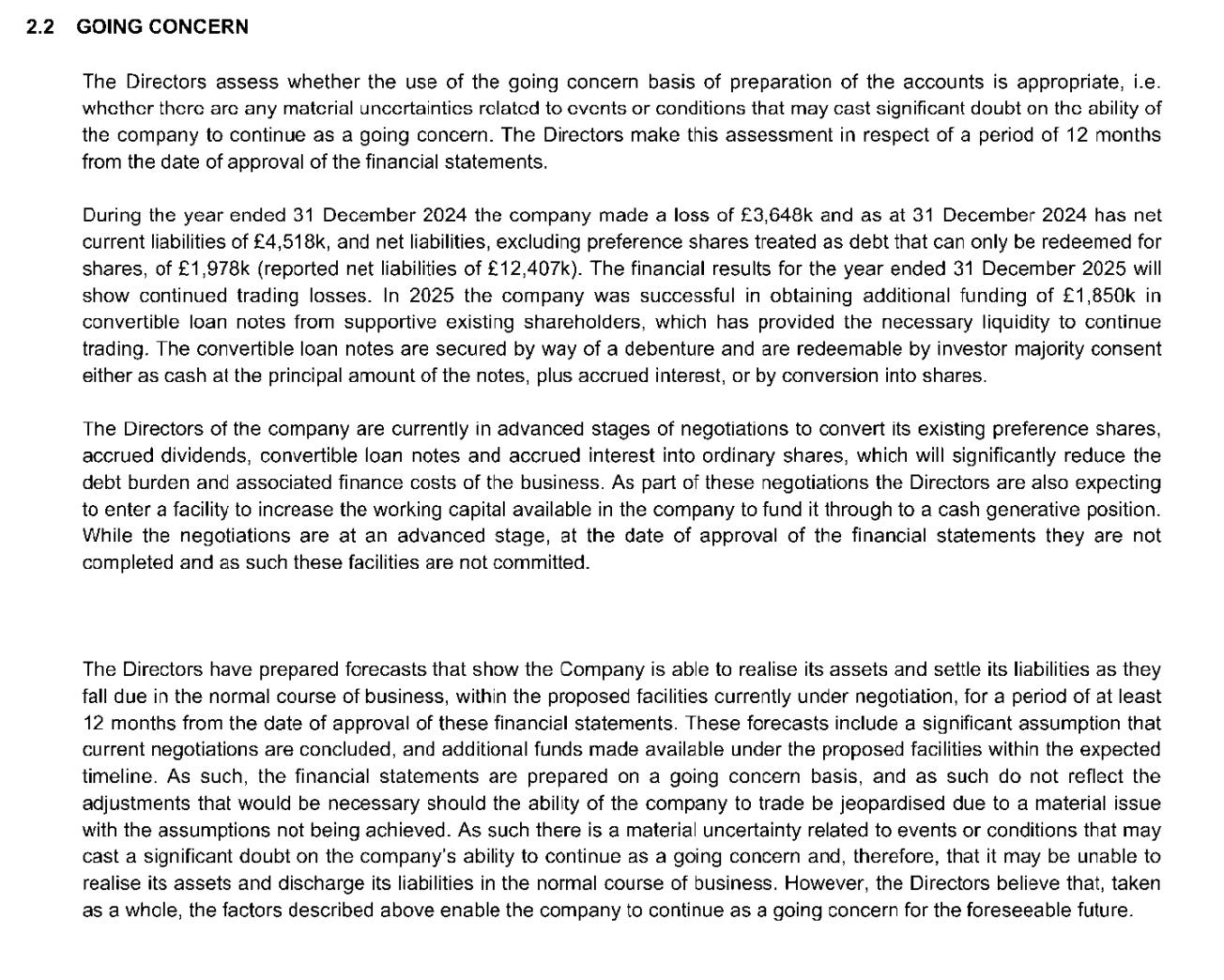
At the time of their purchase of Good Energy, Esyasoft briefed that it wanted to support “Zapmap and in the longer term consider the best ways of driving the latter to profitability and its potential for international expansion”. After the acquisition, they provided Zapmap with £1.8m, which was mentioned in the recent accounts, though it is still clearly loss-making. So, presumably, the current negotiations described in the accounts are part of recapitalising the company and getting it ready to be able to grow across the globe without fear of going under.
This is my hypothesis... though I wonder if this will see Zapmap evolve from primarily being seen as a driver app, to becoming a fully fledged data platform for Good Energy – an area which arguably Zapmap has been moving into for some time. It would certainly help explain the changes in their descriptions and the suggestion of becoming ‘cash generative’.
I guess we’ll likely see what happens soon…
Quick EV news...
📊 Data released this week by New AutoMotive shows EV registrations made up one in four newly registered cars in February. Read more. According to SMMT, however, this is the second month in a row where EV registrations have shrunk. Read more.
🫢 Why could that be? Well, a survey of around 12,000 motorists conducted by Electrifying.com and the AA, sheds some light on the cooling demand. Apparently, 55% said mileage-based charging would deter them from going electric. Read more.
👨⚖️ In the last week, there’s been much excitement that the UK’s First-tier Tribunal has ruled that public EV charging can qualify for the 5% reduced VAT rate, rather than 20%, under existing “de minimis” rules. This follows a challenge made by Charge My Street. Last I checked, the actual decision is yet to be published by the tribunal, so a lot of what we know is just from LinkedIn posts. I contacted HMRC for a response to see if they would appeal the decision, which seems extremely likely given the tax revenue at risk. A HMRC spokesperson said the department was “carefully considering the decision and our next steps.” Read more.
FYI: Next week is SMMT’s Electrified event. I’ll be there, so do reach out if you fancy a coffee.
Sadly pay per mile has really scared people who were a bit uncertain about EVs.
The tax benefits are also very similar for PHEVs, making it a hard sell.
I fear the government acted too soon, raising very little money but sabotaging their program. Was it deliberate?