

Hello, I’m Tom Riley, and welcome back to The Fast Charge, a British EV newsletter.
Top story in today’s email… Several major charging networks have voiced concerns about taxpayer money being used to subsidise motorway service owners who are building their own EV networks.
Elsewhere… All-electric registrations soar, Milton Keynes abandons its charging hub plans, and a man is jailed for telling EV fibs.
As always, if you have any comments or feedback, please reply to this email or message me on LinkedIn.
Charging networks raise alarm over £190m fund for motorway service areas
Headline: Major charging networks have raised significant concerns about a government scheme to provide £190 million to owners of motorway service areas to establish grid connections, The Fast Charge can reveal.
The networks… who do not want to be named, operate more than 10,000 chargers in the UK, the majority of which are rapid or ultra-rapid. This comes after a consultation on the Government’s Strategic Charging Infrastructure Scheme closed last week. Several of the networks have shared their responses to The Fast Charge, stressing their belief that taxpayers’ money would be better used elsewhere.
Context… Once upon a time in 2020, the UK Government proposed a Rapid Charging Fund worth nearly £1bn. This money was allocated to support certain road locations in the UK to get high-powered grid connections installed. Given it’s an expensive process, on the face of it, this seemed like an entirely sound idea.
However… it became clear that the design of the scheme would effectively subsidise owners of motorway service areas (MSAs), such as Welcome Break, Roadchef, Moto, and Extra. Given these businesses are highly lucrative and well backed, as MSAs get a tremendous amount of footfall, many in the EV sector fought the scheme on the grounds that it would save MSAs from making investments themselves, and that it would leave drivers paying higher prices – as they already do for petrol and diesel at motorway services – due to a lack of competition at these critical ‘splash and dash’ sites.
After years of delays… and a £70m pilot… Labour scrapped the fund in 2025. In its place, £400m was allocated to boost EV charging at on-street locations. However, in 2026, following a review of the strategic road network and EV charging ‘cold spots’, the scheme was resurrected. Backed with £190m out of the £400m above, the Government’s Strategic Charging Infrastructure (SCI) Scheme was born. Its purpose, like its forefather, is to support certain MSA locations where connecting to the grid is “uncommercial”. Many of these sites were identified as part of the consultation covering the scheme, which launched in June 2026.
So, why are networks so angry? This fund is a fifth of the size, the Government has acknowledged a lot of the previous criticisms, and has baked into the new scheme that the new electricity to the sites will be reserved for firms installing ‘open-access’ EV charging. The government has said the supply could be available for multiple charge point operators to come in. Surely, networks should be thrilled?
Well… Networks disagree. They believe the Government has overlooked a critical item: MSA owners have or are setting up their own charging networks. For example, Moto launched its own network in December 2025, Roadchef recently installed its first branded hub on the M6 (though it doesn’t seem to be live yet), and Applegreen Electric (who are owned by the same company that runs Welcome Break) is flourishing with nearly 500 chargers already live.
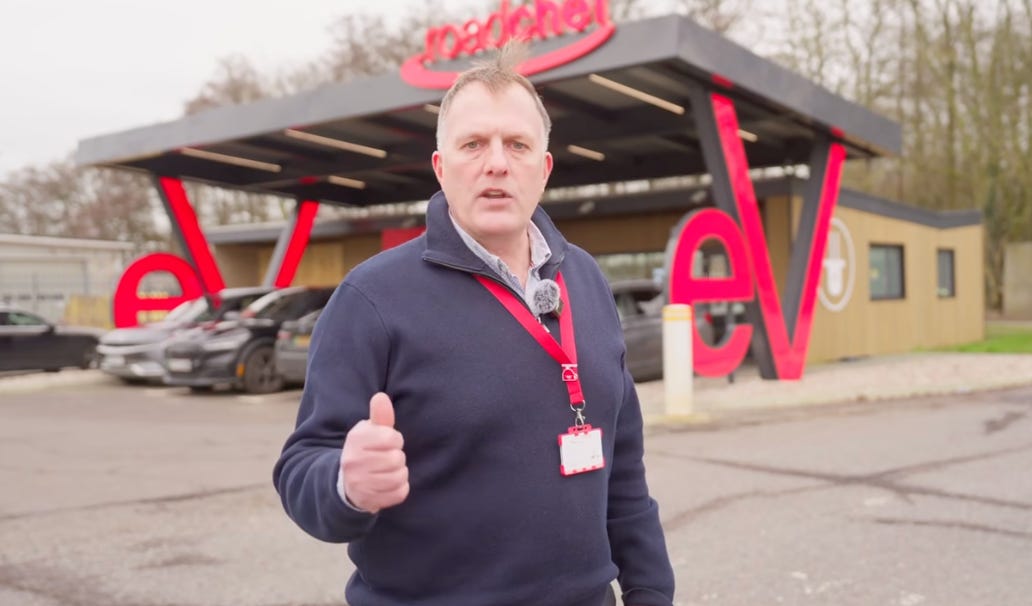
Given MSAs are the landowners… EV executives believe MSA networks will take priority on connections, as DfT has set no rules to prevent MSAs from refusing outside operators to come in and compete. This could result, much like existing motorway fuel stations, with high prices set for drivers due to a lack of competition. Where there are multiple networks at a motorway service area, it’s believed high bay rentals for outside networks will make competing difficult. Likewise, I have already been told of one MSA owner who is, allegedly, planning to re-route their car park so cars will flow to its own chargers, rather than any competitors.
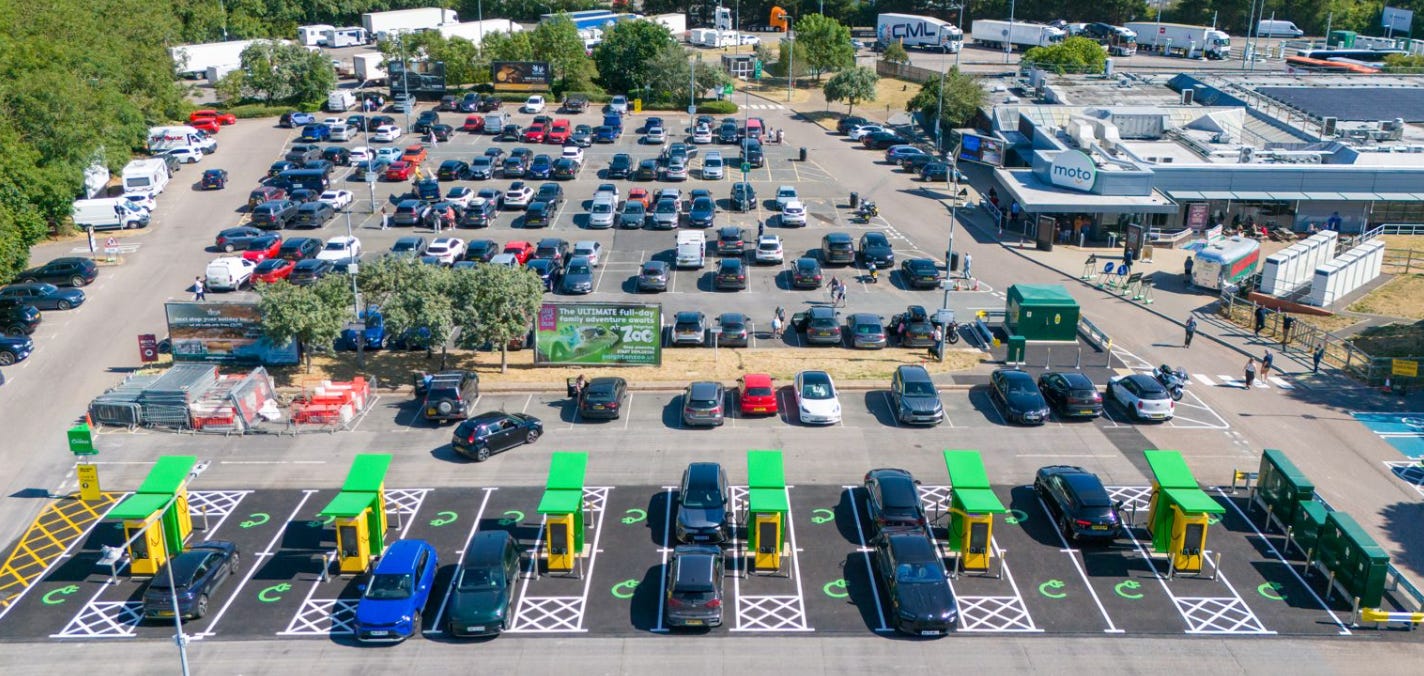
This is why there is frustration at the £190m. Elsewhere, EV charging operators have to pay for their own connections, land, or compete fairly for a tender. With this scheme, unless officials listen, there’s a risk that taxpayer money will boost the market positions of MSAs with few benefits for drivers. Like other operators, executives believe MSA owners should invest themselves rather than rely on a subsidy. At the very least, the government needs to tighten the rules to prevent a monopoly at any funded sites.
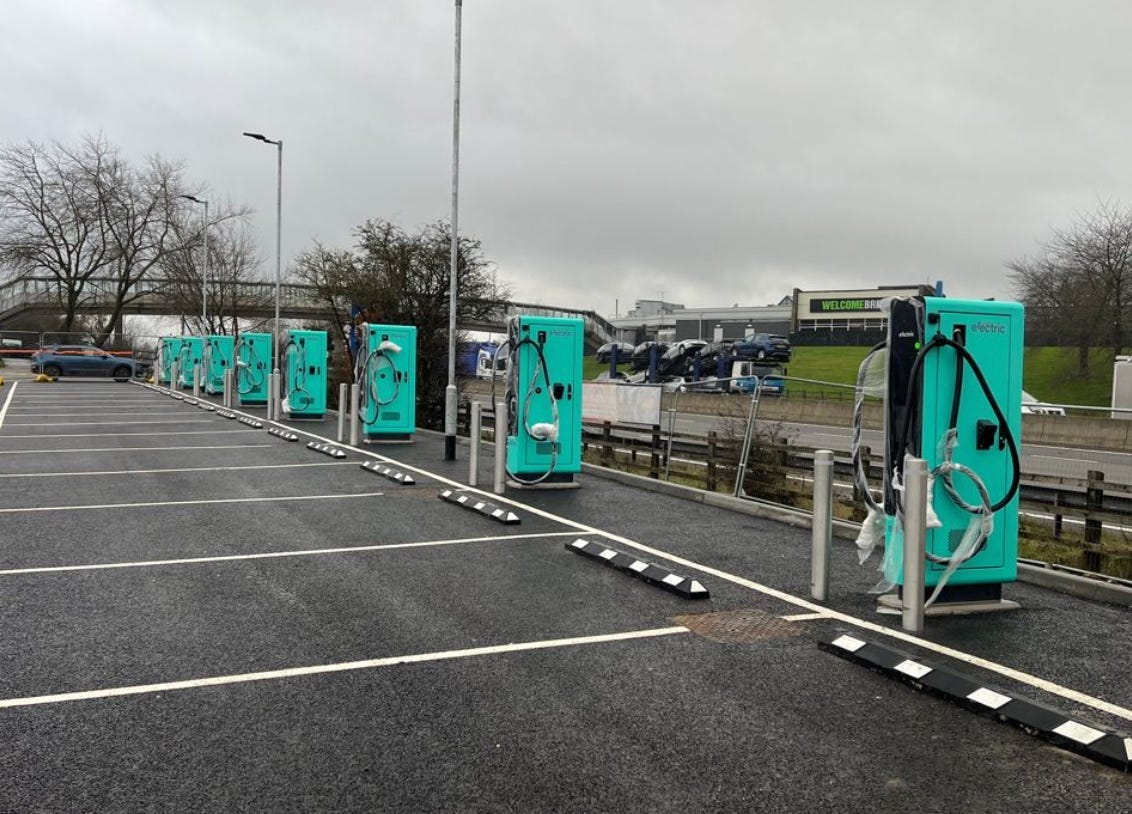
Will the government listen to concerns? The Department for Transport says it is. Though some were surprised that, less than a week since closing its consultation, National Highways and the Office for Zero Emission Vehicles kicked off an engagement process with network connection providers to help scope out the scheme’s delivery. That was on Sunday. This was expected, as the SCI consultation stated the government intended to begin this process early to secure the best value from connection providers. But it does suggest the scheme is expected to move ahead regardless.
In response to the concerns raised, a DfT spokesperson said:
“A reliable and accessible charging network is essential for EV drivers, which is why we are boosting charger availability at some motorway service areas to make journeys easier and more convenient.
“We are carefully considering responses to the Strategic Charging Infrastructure consultation, which will inform final decisions on its design.”
Latest EV news…
👋 Milton Keynes has canned its £360m tender process which was meant to deliver 169 charging hubs after it received no compliant bids. Read more (paywall). If it’s anything like why North Yorkshire abandoned their plans, I suspect it’s been abandoned as it made no financial sense to any operators.
🧑⚖️ Remember in early 2024 when, like a wildfire, the story of a runaway electric Jaguar hit the news. Well, as they say, the truth will out… The driver was found guilty of fabricating the claims. Apparently, he made up the whole thing to try to get out of his car finance arrangement. He sold his story to The Sun and Daily Mail for a combined £800, and apparently JLR had to spend around £50m in marketing to counter the adverse publicity. He’s been banned from driving for five years and has been jailed for four years. Read more.
📈 New data from SMMT suggests new EV registrations in July rose by 44.5% year-on-year. In the press release, they have continued to suggest this is because of heavy discounting and government incentives. They have again called for a change to the ZEV mandate. Sadly, for them, I think this argument is not cutting through, as even the Sunday Times – which first reported on the potential changes to the mandate earlier in the Summer – published a story over the weekend about how carmakers are now reducing discounts on their EVs to capture rising demand.
💷 A new analysis by New AutoMotive has put a figure on the amount of VAT that is to be paid by EV drivers who don’t have off-street parking. This comes on the back of Prime Minister Andy Burnham reducing all VAT on domestic electricity. It’s £172m. Read more.
🔌 Allego has announced plans to invest £85m to install up to 1,400 new ultra-fast chargers in the UK by 2030. Read more.
🚗 Used electric car leasing has risen by 170% in the last year across members of the British Vehicle Rental and Leasing Association. Read more.
📮 Royal Mail has just added its 9,000th electric van to its fleet. A first-class feat that hopefully helps them overcome their often second-class delivery times. Read more.